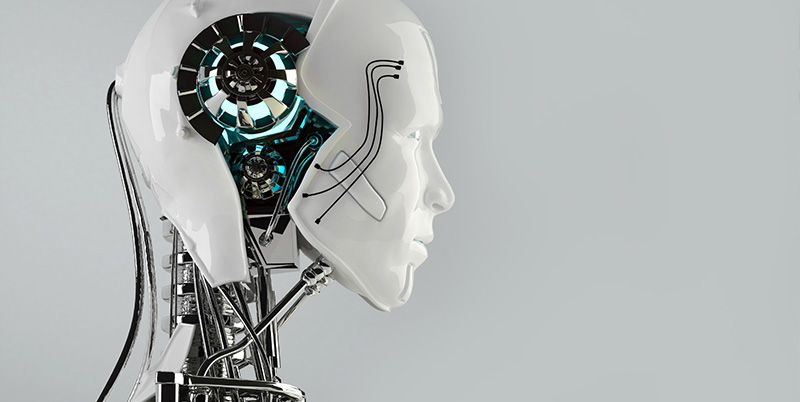
Artificial Intelligence (AI) and Machine Learning (ML) are transforming the way humans interact with technology. From smartphones and smart homes to healthcare, finance, and transportation, AI and ML have become core drivers of innovation in the digital era. Although often used interchangeably, AI and ML are distinct yet closely connected concepts.
What is Artificial Intelligence (AI)?
Artificial Intelligence refers to the ability of machines or computer systems to perform tasks that normally require human intelligence. These tasks include reasoning, problem-solving, understanding language, recognizing images, and making decisions. AI aims to simulate human intelligence so that machines can act intelligently and independently.
AI can be broadly categorized into:
- Narrow AI: Designed to perform a specific task, such as voice assistants, recommendation systems, or facial recognition.
- General AI: A theoretical form of AI that can perform any intellectual task a human can do.
- Super AI: A hypothetical stage where machines surpass human intelligence in all aspects.
What is Machine Learning (ML)?
Machine Learning is a subset of AI that focuses on enabling machines to learn from data without being explicitly programmed. Instead of following fixed rules, ML algorithms analyze data, identify patterns, and improve their performance over time based on experience.
Common types of Machine Learning include:
- Supervised Learning: The model learns from labeled data (e.g., spam detection).
- Unsupervised Learning: The model finds patterns in unlabeled data (e.g., customer segmentation).
- Reinforcement Learning: The model learns through trial and error using rewards and penalties (e.g., game-playing AI).
Relationship Between AI and ML
AI is the broader concept of creating intelligent machines, while ML is one of the most powerful techniques used to achieve AI. In simple terms, ML provides systems with the ability to automatically learn and improve, making AI applications more accurate and efficient over time.
Applications of AI and ML
AI and ML are used across various industries:
- Healthcare: Disease diagnosis, medical imaging, drug discovery.
- Finance: Fraud detection, algorithmic trading, credit scoring.
- Retail: Product recommendations, demand forecasting, chatbots.
- Transportation: Self-driving vehicles, traffic prediction.
- Education: Personalized learning systems and automated grading.
Benefits of AI and ML
- Improved efficiency and automation
- Data-driven decision-making
- Reduced human error
- Ability to process large volumes of data quickly
- Enhanced customer experiences
Challenges and Ethical Considerations
Despite their benefits, AI and ML also present challenges such as data privacy concerns, algorithmic bias, lack of transparency, and potential job displacement. Ethical use, proper regulation, and responsible development are essential to ensure these technologies benefit society as a whole.
Future of AI and ML
The future of AI and ML is highly promising. As computing power increases and data availability grows, these technologies will become more intelligent, adaptive, and integrated into everyday life. Fields like explainable AI, human-AI collaboration, and responsible AI development will play a crucial role in shaping the next generation of intelligent systems.
Conclusion
Artificial Intelligence and Machine Learning are revolutionizing the modern world by enabling machines to think, learn, and act intelligently. While challenges remain, their potential to improve efficiency, innovation, and quality of life is immense. With responsible development and ethical considerations, AI and ML will continue to be key pillars of technological progress.